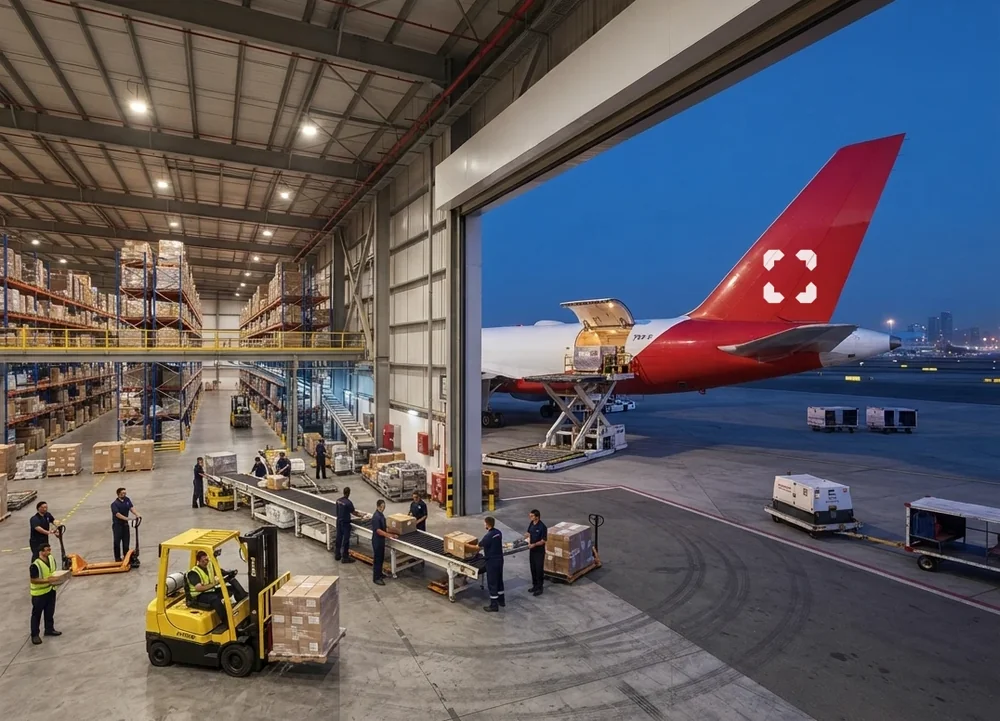
Over the past several years, manufacturers serving the US market have been moving production closer to the border instead of running it from farther away. That shift, usually called nearshoring, has turned central Mexico — and especially the Bajío region — into one of the most active manufacturing corridors on the continent. For anyone shipping freight in or out of that region, it changes what "normal" capacity and routing look like.
What nearshoring actually means for freight
Nearshoring is a manufacturing decision, but it shows up first as a logistics problem: more plants opening or expanding in the same region means more inbound components, more outbound finished goods, and more trucks needed on the same corridors at the same time.
Two effects matter most for shippers:
- More competition for capacity on the busiest lanes, especially around model launches, line startups and peak production months.
- More value in an established carrier relationship. When capacity is in demand, shippers with a real freight provider — not just a spot-market quote — get priority.
Why the Bajío specifically
"El Bajío" is not one city, it is a manufacturing region spanning several states, with automotive, aerospace and electronics plants concentrated around León, Querétaro, Aguascalientes and San Luis Potosí. What makes it attractive for nearshoring is largely a logistics advantage: it sits on Mexico's main north–south industrial corridor, with road access both to the US border and to the ports and population centers of central Mexico.
Monterrey as the hinge point
Most Bajío-bound freight from the US border runs through or near Monterrey, which functions as the hinge between the Laredo crossing and the manufacturing region further south. That is why lane-specific capacity (not just generic "Mexico freight" capacity) matters here: a carrier that regularly runs Monterrey ↔ Laredo, Monterrey ↔ Querétaro and Laredo ↔ El Bajío knows the checkpoints, the timing and the realistic transit windows on those specific lanes, which a one-off carrier does not.
What this means for your freight plan
- Treat the Bajío as a region, not a single destination. If you ship to more than one city in the area (León, Querétaro, Aguascalientes, San Luis Potosí), plan your consolidation and routing around the region as a whole. See our Monterrey ↔ El Bajío lane for how we structure that coverage.
- Build in border-crossing time, not just road time. For freight originating in the US, the crossing itself — not just the driving distance — is part of your transit time. Our border documents checklist covers what needs to be ready before pickup.
- Decide between FTL and LTL based on real volume, not habit. As Bajío volume grows for a shipper, the math between a dedicated trailer and a consolidated shipment can change. See FTL vs LTL: how to choose.
- Plan for growth, not just today's volume. If nearshoring is driving your own supplier or customer base to expand in the region, your freight plan should assume more volume next year, not the same volume.
How On Time International helps
We run dedicated lanes across the corridor — Monterrey, Querétaro, Mexico City, the Bajío cities and the Laredo crossing — with a staffed Monterrey office and a Laredo, TX warehouse at the US end of the route. If your supply chain is shifting into this region, request a quote and tell us your expected volume so we can plan the lane with you, not just quote your next shipment.